by Center for Mentoring Excellence | Aug 2, 2016 | Facilitating Learning, Making Mentoring Work For You, Mentoring Relationships
So, you’ve decided that you want to start a mentoring relationship. But now what? You need to find a mentor. That might be easier said that done, however. Finding a mentor that’s a good fit for you is an important part of the mentoring process, one that is worth the effort and the time.
And it’s about more than just finding someone you like. You need to be intentional about finding a mentor, and you must consider more than personality — consider learning styles and communication styles.
Here are some things to consider as you begin your search:
- It starts with you — What are you looking to learn? What attributes are you looking for in a mentor? Knowledge, expertise, experience (or all of the above)?
- Identify your “must haves” — What do you need to have in a mentoring relationship? Make a list!
- Use your network like crazy — Tell people what you’re looking for. You never know who they might be able to introduce you to! Meet people, get contact information, research names, find out what you can. Your network is a great tool when looking for the ideal mentor.
- Go back to your list — Once you’ve collected a list of possible mentors, figure out who meets your criteria (and who doesn’t) and begin to select the ones you’d like to reach out to.
Some do’s and don’ts:
- Don’t:
- Pick someone who will be too easy on you
- Select someone just because they like you
- Choose someone because they are the most convenient
- Opt for someone because you already have a relationship
- Choose someone you report to directly
- Do:
- Seek a good learning fit between what you need and what this person has to share
- Find out if this person has sufficient time to mentor you
- Ask yourself if this person will challenge and encourage you to constantly raise the bar for yourself
- Consider if this person appears to be a good listener, has a sincere desire and willingness to mentor, and the knowledge and expertise you need.
Now the fun part: Meet them! Make sure to set up time to get to know your potential mentors, and see if they fit your mentoring criteria. Once you meet them you’ll quickly be able to tell if they are the right one for you.
(Photo via Flickr CC: Mateus Lunardi Dutra)
by Center for Mentoring Excellence | Jun 20, 2016 | Facilitating Learning, Making Mentoring Work For You
Your company has just announced a new mentoring initiative that has generated a groundswell of interest and excitement. Your supervisor has signed you up as a mentor and just let you know. Gulp! What am I in for?
You are busier than ever on top priority and high impact projects and you know there are three more waiting for you once those are completed. Additional responsibilities in your role are stressing you out.
Now you have been “voluntold” that you must participate in the initiative as a mentor.  Can you say no? How would it look if you didn’t participate? What would your supervisor think? What would it say about your ability to manage your workload?
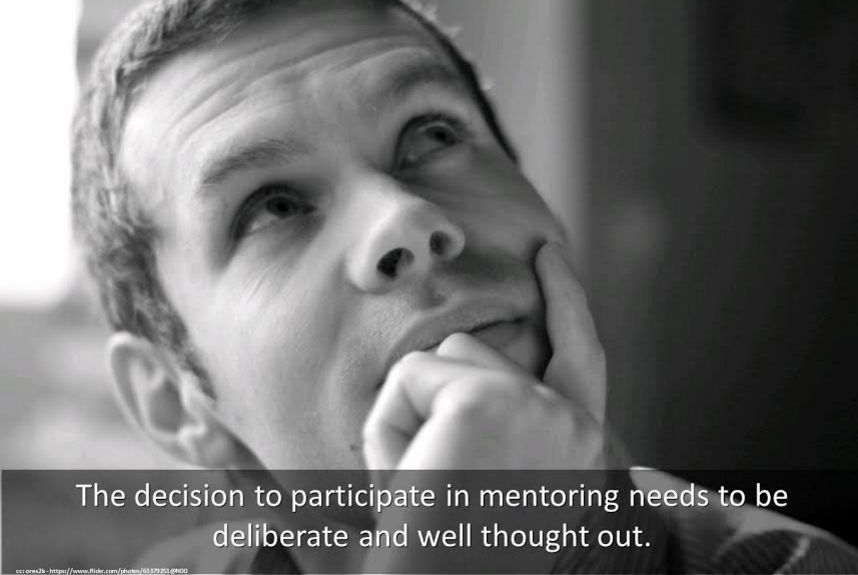
Mentoring participation is a serious commitment. Participating because you’ve been voluntold isn’t a good enough reason to say yes. You have to want to be a mentor. It takes time and effort, and without a serious personal commitment you may well not have the energy and enthusiasm you will need to be successful.
Know that you are not alone. Peer pressure can be bad enough without being voluntold by one’s supervisor.
Here are six questions to consider before making this hard decision:
1. Do I have a sincere desire to engage in a mentoring relationship?
2. Am I willing to do the work required to prepare for mentoring meetings?
3. Do I possess the requisite knowledge, expertise or experience to mentor a mentee?
4. Do I have sufficient time right now to mentor a mentee?
5. Do I feel comfortable being a mentor?
6. What competencies or skills do I possess that would make me a good mentor?
If you can’t do the job that being a good mentor requires, It is best to speak up and say no (even if you have been voluntold).

by Center for Mentoring Excellence | Apr 14, 2016 | Growth and Development, Making Mentoring Work For You, Mentoring Communication, Mentoring Questions, Mentoring Relationships
Chemistry. Compatibility. While these traits are crucial to a successful mentoring relationship, there’s so much more involved, most importantly — you. What do you want to learn? Who do you want to learn it from? Recruiting a mentor can seem like a daunting task, but being thorough and prepared when making the ask leads to success.
How to Prepare
Have a conversation with yourself:
- Identify what it is you need to learn.
- Think about what you need from a mentor.
- Consider how much time you can contribute to a mentoring relationship. Look yourself in the mirror and honestly consider if you have the time, willingness and commitment to mentoring.
- Think about your prior mentoring experiences and how you can actively contribute to the success of your relationship.
Ask yourself some important questions:
- Am I sincerely interested in learning?
- Am I willing to commit time to developing and maintaining a mentoring relationship?
- Am I willing to be open and honest with myself and another person?
- Can I participate without aversely affecting my other responsibilities?
Making the Ask
You can do all the preparation in the world, but if you aren’t able to communicate your needs and ask a potential mentor for their time and energy in an inviting and honest way, you may lose out on a great mentoring opportunity.
Make sure to clearly communicate:
- What you want to learn.
- Why you want to learn it.
- Why you think this person is a good match for you.
- What you need from the relationship.
- What you are willing to contribute.
Make sure to present yourself as:
- Competent
- Committed
- Compatible
- Conscientious
- Ready to Learn
- Accountable
With the right preparation, the right communication and the right presentation, you’ll be able to set yourself up for success when asking a potential mentor for their help.
How have you sought out mentors? What worked and didn’t work for you?

by Center for Mentoring Excellence | Mar 2, 2016 | Making Mentoring Work For You, Mentoring Relationships, Uncategorized
The idea of inserting accountability into a mentoring relationship may seem unnecessary. And yet, unless you build in a process to ensure accountability, there is always a temptation to sidestep it.
When mutual accountability becomes an ongoing expectation in a mentoring relationship it creates a shared frame of reference. It strengthens the relationship by improving communication and avoiding mentoring pitfalls. It enables partners to make midcourse corrections.
When mentoring partners engage in regular conversations about their mentoring relationship, it maintains the momentum of the relationship and contributes value to the learning of each mentoring partner.
Accountability conversations need not be cumbersome, but they should be held regularly, whether it is once a month or every quarter. If your relationship seems to be going well, checking in on its health will help ensure that you and your mentoring partner’s need are being met. At the same time, accountability conversations can assist you in gauging your progress over time and help you decide what you steps you can take to grow and improve your relationship.
We’ve developed a Mentoring Partner Check-In Accountability Tool to guide regular accountability conversations.You and your mentoring partner can complete this tool independently and then compare your responses. Or, you and your mentoring partner can complete this tool together.
You and your mentor should plan to use this tool periodically to ensure that you are staying on track. And, even if you haven’t agreed to do so initially, feel free to introduce this tool to your mentor partner at any time during your mentoring relationship. This may prove especially helpful if you suspect that your meeting time could be better utilized and you aren’t comfortable raising the issue with your mentor.
Use the Mentoring Partnership Check-In Accountability Tool throughout your relationship to make sure you stay on track and the trust level remains high.

by Center for Mentoring Excellence | Feb 11, 2016 | Making Mentoring Work For You, Uncategorized
Mentoring success depends on the degree to which mentoring partners roll up their sleeves and do the work. Yes, we said, “work.” Throughout your mentoring relationship, you and your mentoring partner need to be fully engaged in building and strengthening your relationship and focused on achieving your mentoring goals.
Mentoring Works Best When Mentees….
- Assume responsibility for their learning, growth, and development
- Set goals
- Hold themselves accountable for agreements
- Monitor their progress regularly
- Maintain receptivity to new, creative, and alternative strategies and ideas
- Are honest, open and willing to be vulnerable
- Communicate regularly
- Are prepared for and open to feedback
Mentoring Works Best When Mentors….
- Commit the time
- Build their relationship up front
- Ask questions rather than to try and solve a mentee’s problems
- Push and challenge their mentee
- Share experiences and challenges
- Offer options rather than answers
- Provide honest, ongoing, and candid feedback with care and compassion
- Maintain regular contact

by Center for Mentoring Excellence | Jan 5, 2016 | Making Mentoring Work For You
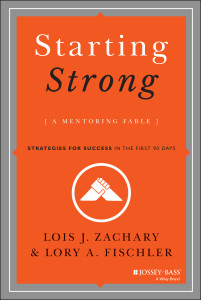 Starting Strong: A Mentoring Fable provides a view inside six successful mentoring conversations that take place over 90 days. The reader is privy to the thoughts and reflections of both the mentor and mentee, and gets to observe the personal dynamics of a successful mentoring relationship as it unfolds. It’s an excellent training resource because it models how good mentoring should look and feel.
Cynthia is one of the mentors you meet in the book. She is an experienced mentor who is committed to her own growth and development as a mentor and the growth and development her mentees.
The story of Cynthia and her Gen-Y mentee unfolds over 90 days (six mentoring meetings) and you get to sit in on each of them. You will hear their private thoughts before, during and after their meetings. At the end of each chapter, you will find questions to prompt personal reflection and spark conversation about the chapter content.
Cynthia learned the hard way about how to create a successful mentoring partnership. After a few failed mentoring relationships of her own, she grew from the experience. By the time she launched her next relationship, she was savvier and had a clearer understanding of what it takes to achieve tangible results.
What made the difference for Cynthia? What did she do differently that made her more successful?
In Starting Strong, you will learn about Cynthia’s strategies for mentoring success:
1. Cynthia recognizes that her mentee will be uneasy as the more junior employee, mentored by a senior executive. She takes time to get to know him and put him at ease before launching into the work of mentoring.
2. Some key structures and agreements help set the tone and expectations for progress and accountability. The mentee, who is new to mentoring, thought mentoring was an informal drop-in relationship.
3. Learning is the purpose and product of mentoring — and its goals drive the learning. Mentors and mentees alike struggle with goal setting. It can be tempting for mentees to pick goals they can easy achieve or that aren’t relevant to their work success.
4. Application of skills and learning are a critical part of mentee success.
5. Stumbling blocks are inevitable in mentoring relationships. Mentors and mentees need a confidential, safe place to get coaching around issues that surface.
6. The 90 day mark is an excellent time to schedule a check-in with mentoring partners.
The conversation playbook guides you so that you can engage in parallel conversation with Cynthia and her mentee. It prepares you for your mentoring sessions by suggesting appropriate conversation topics, starters and probing questions to use to build a solid foundation for your own mentoring relationships during the first 90 days.