by Center for Mentoring Excellence | Jan 12, 2015 | Making Mentoring Work For You, Mentoring Relationships
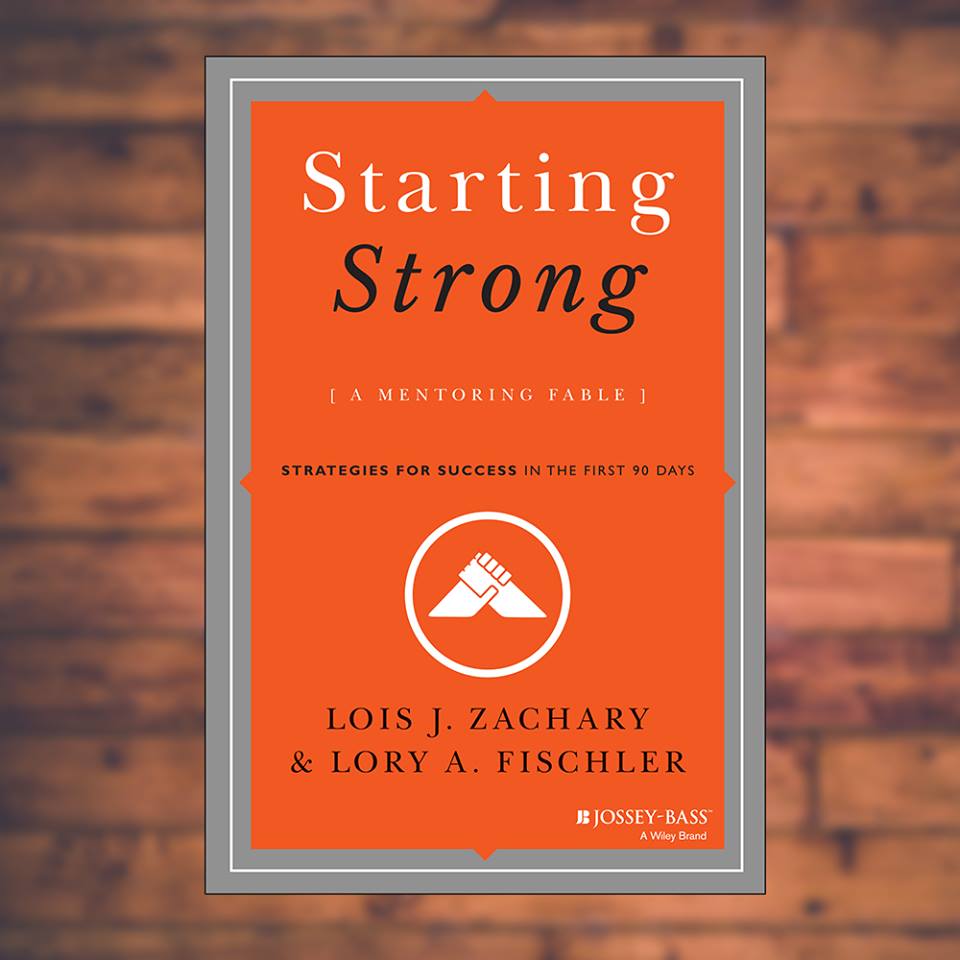
Starting Strong: A Mentoring Fable provides a view inside six successful mentoring conversations that take place over 90 days. The reader is privy to the thoughts and reflections of both the mentor and mentee, and gets to observe the personal dynamics of a successful mentoring relationship as it unfolds. It’s an excellent training resource because it models how good mentoring should look and feel.
Cynthia is one of the mentors you meet in the book. Cynthia learned the hard way about how to create a successful mentoring partnership. After a few failed mentoring relationships of her own, she grew from the experience. By the time she launched her next relationship, she was savvier and had a clearer understanding of what it takes to achieve tangible results.
 As a Program Coordinator, your mentoring pairs can benefit from Cynthia’s wisdom and experience. During the first 90 days of her relationship, she engaged her mentee in six essential conversations that led him to deepened insight and transformation.
What made the difference for Cynthia? What did she do differently that made her more successful? In Starting Strong, you will learn about Cynthia’s strategies for mentoring success:
- Cynthia recognizes that her mentee will be uneasy as the more junior employee, mentored by a senior executive. She takes time to get to know him and put him at ease before launching into the work of mentoring.
- Some key structures and agreements help set the tone and expectations for progress and accountability. The mentee, who is new to mentoring, thought mentoring was an informal drop-in relationship.
- Learning is the purpose and product of mentoring — and its goals drive the learning. Mentors and mentees alike struggle with goal setting. It can be tempting for mentees to pick goals they can easy achieve or that aren’t relevant to their work success.
- Application of skills and learning are a critical part of mentee success.
- Stumbling blocks are inevitable in mentoring relationships. Mentors and mentees need a confidential, safe place to get coaching around issues that surface.
- The 90 day mark is an excellent time to schedule a check-in with mentoring partners.
How have you made the most of your first 90 days of mentoring?
Learn more about how to strengthen your mentoring relationships — order your copy of Starting Strong today.
And don’t forget — enter to win a free audio book copy of Starting Strong. Simply go to Twitter here, and retweet!
by Center for Mentoring Excellence | Jan 9, 2015 | Mentoring Relationships, Mentoring Training
Are you from Gen X or Y, anxious to advance your career?
Are you eager make a mark in your organization?
Are you committed to orchestrating your own future?
If you’ve answered “yes” to any of these questions, you will need good mentors if you’re going to be successful.
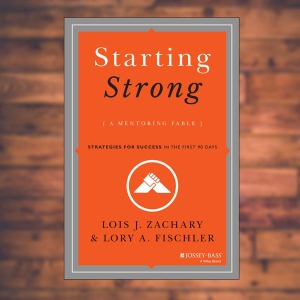
In our new book, Starting Strong: A Mentoring Fable, you have the opportunity to observe mentoring at work and learn valuable lessons from an experienced mentor about what makes a mentoring relationship successful.
 Cynthia, a talented and successful VP of Marketing and Communications agrees to mentor Rafa, a Gen Y financial analyst. Cynthia enjoys mentoring talented, ambitious employees, but only when she is sure that her time investment will truly make a difference.
Rafa is new to mentoring and doesn’t know what to do or what to expect. In retrospect, he realizes that he had a lot to learn about mentoring. The truth of the matter is, most mentees, like Rafa, would like to come to mentoring better prepared.
In Starting Strong, you soon discover just how important the first 90 days are to laying the groundwork for a productive and successful mentoring relationship and what you can do to prepare yourself so that your mentoring relationship starts out and stays strong.
Here’s a sneak peek at some of the success strategies you will find in our book:
- Get to know your mentor and help them get to know you.
- Do you feel comfortable being honest and open about your strengths and weaknesses?
- Establish agreements that define your relationship and clarify your expectations.
- How often will you meet?
- What is your understanding about confidentiality?
- Who will set the agenda for your meetings?
- Articulate the goals that will be the focus of your relationship.
- Are they SMART (Specific, Measurable, Achievable, Relevant and Timely) enough to produce tangible results?
- Identify specific learning opportunities that will encourage you to stretch and grow.
- Are you playing it safe, or are you being pushed out of your comfort zone?
- Check in on progress after 90 days.
- What is working?
- What could be better?
- Are you getting the support you need?
- What else are you looking for?
To learn more about what you can do to get your relationship started on the right foot, order your copy of Starting Strong today.
You can also enter to win a free audio book copy of Starting Strong. Simply go to Twitter here, and retweet!
by Center for Mentoring Excellence | Jun 24, 2014 | Making Mentoring Work For You, Mentoring Relationships
In today’s connected world, mentoring for leadership and career development is easier than you might think. With collaboration and video conferencing tools, you can build relationships across the globe and develop your career from the comfort of your own home. Don’t get me wrong; meeting in person is always preferred. But, could you mentor remotely? Of course! Let me show you. Follow these five steps to launch your distance mentoring relationships into the cybersphere.
1. Incorporate Google tools in your mentoring work plan
From Google Hangouts to Google+, the search-engine super star has many gizmos that are perfect for mentoring. If you haven’t joined Google+, I highly recommend that you do so quickly. In addition, use Google Drive to share and collaborate on documents, projects and presentations with your mentors or mentees. It’s easy and makes working together simple and cooperative.
2. Create a LinkedIn group
With LinkedIn, you can produce and share content with large groups of people. But what about sharing content with a select few? The platform allows you to leverage groups to build a safe space to share experiences and to network.
3. Adopt a video conferencing tool
Meeting face-to-face is such an important part of building relationship. Now we have technology that can help. From iMeet to Fuze, there are many conferencing services available. With the right tool, you can connect with your mentees (or mentors) from anywhere and even maintain your meeting schedule. So, when you’re working on the road or traveling with your family, check in with your mentor and continue to build your relationship via video. If you have an iPhone, you can Facetime in to meetings and touch base with your mentees with the click of a button.
4. Use Twitter to connect
I expect my mentees to continuously grow their careers and develop as people. When I can’t see my mentees, or I have to miss a meeting, Twitter allows me to stay in touch. You can use the platform to check in, comment on work or add your two cents to project or personal development. Want to send a private message? The platform offers that function as well. Don’t fret the 140-character limit; it can be a blessing — trust me.
5. Encourage your mentees to use social media
Social media is an excellent place to build a professional network, find a mentor and nourish your relationships — use it. You should use Twitter, Facebook, LinkedIn, Google+ and Pinterest to share your ideas and build a community of people that share your interests. The world has never been more connected, so get out there and meet people.
As you can see, there are many tools out there to help you stay connected and continue to build your professional relationships. It’s up to you to use them.
If you have questions, contact us. We’re here to help you.
by Center for Mentoring Excellence | May 30, 2014 | Mentoring Relationships
Whether you’re a mentor or a mentee, social media is a fantastic tool to amplify your voice and help you join communities. It provides you with the tools to reach out to those who inspire you to develop your career. Luckily, there are many social tools to help you along the way. Let’s look at the benefits of using social media as a mentor or mentee.
Finding a mentor
You could tweet a potential mentor on Twitter or send them a message on LinkedIn. But, convincing someone you’ve never met to be your mentor can be tricky. It’s critical that you know as much as possible about your prospective mentor before you reach out. Fortunately, researching is easy.
On Twitter, you can identify possible mentors by monitoring trending hashtags or creating lists of influential people. And, on LinkedIn, you can join industry-specific groups and build relationships with people you find inspiring.
Connecting with a mentor
Depending on the etiquette of the platform, reaching out to your potential mentor could be easy. On Twitter, it’s as simple as a follow. After you follow your potential mentor, make sure to add their handle to a list so that you can easily find and interact with their content.
On LinkedIn, it’s challenging. You don’t want your budding mentor to see you as spam, so be genuine and sincere. Reach out to them via InMail before you send an invitation to connect. Remember, LinkedIn is a professional platform — avoid the cat videos and silly memes.
Be yourself
When you interact on social media, be yourself. Being honest with potential mentors is the key to building rewarding professional relationships. In our digital world, it’s easy to connect and build professional relationships with people in any industry.
If you have questions, feel free to reach out!
by Center for Mentoring Excellence | Dec 17, 2013 | Making Mentoring Work For You, Mentoring Relationships
It’s holiday time and gift-giving is on everyone’s mind. But how about those intangible gifts that are not wrapped up in packages and tied with a bow?
Time is one of them. When you carve out the time to mentor someone it is indeed a very special gift. Your gift of time tells that person that they matter to you, and that you value them. On the other hand, when you repeatedly postpone or cancel meetings, it sends a different message– my time is too valuable for you, our time together isn’t important or you are not worth the investment of my time.
 Remember Stephen Covey’s Four Quadrant Model? Covey makes the distinction between urgent and not urgent activities and those things that are important and not important. Urgent and important items are the crises, pressing problems and deadlines that get most of our attention. We tend to put off things that are deemed important, but are not urgent – like mentoring and personal development. Because they lack urgency nothing compels us to act immediately. Like many people, you might find yourself putting mentoring on the back burner, confident that you will get to it when the crisis du jour is over. Even with the best of intentions you don’t, because sooner or later another crisis takes its place.
If you are waiting to find the time to give to mentoring others, forget it. You will never find the time unless you make sure you make it a priority. Time has a way of slipping by and with it goes the opportunity to make a difference in someone’s life.
What You Can Do
- Put mentoring dates and time on your calendar well in advance.
- Commit making time for mentoring a priority.
- If you have to reschedule, do it ASAP.
- Select the tasks, assignments, decisions, etc. you can delegate to someone else so you can free up your calendar. (Ideally, your delegation should provide an opportunity for someone else to grow and develop.)
- Use planning and time management strategies to make good use of the time you do have.
Questions to Consider
- Where does the priority of mentoring currently fit in your world?
- Who could really benefit from quality time with you?
- How available and accessible are you to the people who need you?
- What tasks are you doing now that someone else could do?
by Center for Mentoring Excellence | Mar 17, 2013 | Mentoring Relationships
Every mentee who participates in a mentoring program where matches are made for them hopes that their mentor will be a perfect match.
While some formal programs make the matches for mentees, many solicit mentee input or top choices before the final match is made. Some programs provide support and resources, but leave the sole discretion for mentor selection to the mentee.
The hope for a perfect match springs eternal. Whether you are responsible for pairing mentors and mentees, or looking for a mentor yourself, there are many criteria to consider. In this blog, we highlight four of them. These factors impact how a mentor and mentee relate to each other and affect the long-term success of the relationship.
1. Attitude and Values
Mentees report a greater level of satisfaction from their mentoring relationship when they share similar values and attitudes with their mentor. These points of connection, discovered early in the relationship, help the mentee and mentor bond and develop trust more quickly. Mentors connect more easily with a mentee who shares similar work values and attitudes (i.e. work ethic, focus on organizational benefit). On the flipside, having similar attitudes and values sometimes limits exposure to a diversity of perspectives. If mentor and mentee both share sensitivity to employee feelings, for example, there might not be as much gain in areas of accountability and conflict management.
2. Style
Style is the manner someone uses to influence others and convey information. It is sometimes used as a synonym for “personality.” Style is about “how” someone delivers a message. It is a strong determining factor in how someone is perceived regarding their approachability, intimidation, friendliness, or coolness. Style can play an overly important role in the selection of a mentor. While opposites can attract, that may not be the case at the beginning of a mentoring relationship. Style differences —soft or hard, informal or formal, head v. heart, left-brained or right-brained, optimistic or pessimistic—play out in the way the mentee receives feedback and support.
Similarity in style increases the mentee’s comfort and ease in navigating a new relationship. When the mentor and mentee share similar styles, a preference for analysis and detail, for example, the mentee is more likely to satisfy their mentor’s expectations. On the other hand, differences can produce significant learning for both mentor and mentee. The detailed-oriented, analytical mentee may be served better by a mentor with a more global, big picture perspective. A mentee who is conflict averse may benefit from a relationship with a mentor with a more direct style.
3. Learning Fit
Learning is the purpose of mentoring. It is why people engage in the relationship, what they do while they are in it, and what they want out of. Ultimately it is the learning fit that is important. Is there a match between what the mentee needs/wants to learn and what the mentor has to offer (experience, expertise, etc.)?
Mentors don’t have to be subject matter experts in the area the mentee is focused on, but they do have to understand the goals, challenges and requirements the mentee faces to ensure accountability for results. Recently, a mentor, the director of customer service, helped his mentee, the director of construction, learn how to improve his team’s engagement and ownership. Expertise and experience were aligned with the mentee’s goals and needs, not the mentee’s technical field.
4. Time
Good intention alone does not ensure good mentoring. Even when values, style and learning fit match perfectly, a mentoring relationship can be compromised when the mentor doesn’t have or make the time to commit to the partnership. Mentees look to mentors to act as sounding boards, encourage them to test out ideas, to “be there for them,” and provide a safety net. All of this requires regularly scheduled meetings, ad hoc availability for questions, occasional check-ins and a continuum of feedback. Time is the biggest challenge for busy mentors, but it is the glue that holds the relationship together. Most importantly, it sends an important message to the mentee: YOU matter.