Creating an Inclusive Work Environment: 3 Ways to Get Started
Are you looking for ways to move the needle on inclusion in your work environment?
What can you do to foster an inclusive work environment? (more…)
Are you looking for ways to move the needle on inclusion in your work environment?
What can you do to foster an inclusive work environment? (more…)
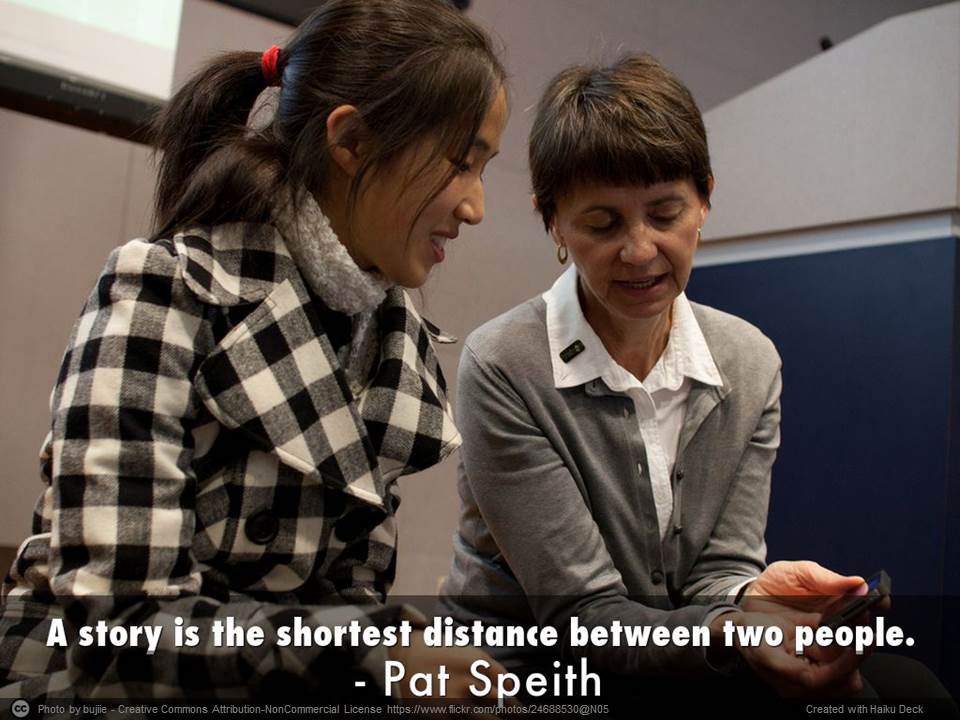
“A story is the shortest distance between two people.”
— Pat Speith
Sharing personal stories, successes and challenges serves multiple purposes in a mentoring relationship.
Hearing stories about your career and personal challenges provides a powerful impetus for mentees to take action.
By sharing strategies for solving problems and dealing with adversity your mentee learns from your experience.
Telling your stories and sharing your learning demonstrates openness and respect, and builds trust.
Your story motivates mentee self-reflection.

So, what is your story?
How can you tell it in such a way that it invites conversation, reflection and learning?
Encourage your mentees to share their stories by:
1. Sharing yours
2. Thinking, in advance, about what you really want to know about them
3. Asking specific questions to encourage them to reflect on their career path, specific experiences, previous successes, and work projects
4. Listening closely to what they say, how they say it, and the words they use to describe their experiences
5. Asking probing questions to encourage them to reflect on the lessons they have learned from their stories

When we wrote Starting Strong, our primary goal was to help people understand what really good mentoring conversation looked like in practice. Second, we wanted to address some very basic (and commonly asked) questions: How do the individuals who are engaged in mentoring experience the relationship? What do they think about? What do they talk about? What conversations should they engage in to build their relationship and facilitate the learning process?
Starting Strong is a combination of two books in one – a mentoring fable and a conversation playbook. The fable presents an in-depth look at the dynamics and conversations inherent in a mentoring relationship when it is first starting out. The characters in the fable represent a composite of real life mentoring issues, struggles, and challenges. The conversation play book contains a set of tools to guide the reader’s mentoring conversations.
We had hoped that Starting Strong would provide a reference, a resource, and case study scenario. However, it wasn’t until recently that we discovered just how powerful it was as a training tool for raising the level of trust, deepening the relationship and keeping mentoring pairs on track.
Starting Strong enabled mentoring partners to build trust quickly because it created a shared language and understanding right from the start.
Starting Strong provided a roadmap for keeping relationships on track. As a result, new mentoring partners were more confident because they knew what to expect and they had the tools and strategies they needed to guide them.
Starting Strong gave experienced mentors new insights that allowed them to recognize what was missing in past mentoring relationships and better understand why they went off course.
Starting Strong provided a context for the training so that participants had a mental picture of what good mentoring looked like.
Starting Strong increased mentee understanding about the purpose of mentoring and their role in driving their own development.
Starting Strong gave mentees a better understanding about the role of their mentor in helping help them tackle their issues – without solving the problem for them.
Each participant was sent a copy Starting Strong prior to the initial mentoring training and asked to think about specific questions prior to the initial training.
We found that reading Starting Strong made a significant difference in the quality and depth of the mentoring conversations that took place during and after the mentoring training.
Our observations were validated by the participant comments five weeks following the training:
Ask participants to read Starting Strong prior to your next training event. It will kick start mentoring training and get mentoring pairs started on the right foot.
By: Lois Zachary
I was excited to see What Do You Do With An Idea? hit the Wall Street Journal top ten bestselling hard cover nonfiction book list. I received my copy of Kobi Yamada’s book more than a year ago as a thank you gift from my mentee, Linda.
I treasure it because it came from her and because the story parallels our mentoring journey together. Like the character in the story, she developed the confidence and competence she needed to take her ideas, grow them and significantly influence others as they blossomed.
Mentees come to us with ideas, ideas they may not yet have articulated, even to themselves. They may have snippets of ideas, glimmerings of ideas, or even half-baked ideas.
Once they surface in conversations with us, our mentees begin to wonder what they are going to do with their ideas — where they are going with them or if they’re worth doing anything with it at all.
Ideas have a habit of clinging to us like sticky paper. Our ideas remain in our heads even when not pursued — after all, they are our ideas. Some mentees lack the confidence to share their ideas for fear of embarrassment or rejection.
In the Yamada story, a child’s idea begs for his attention. He ignores it (even though it still bubbles up from time to time) until one day he summons up the courage to talk about his idea. And, when he does, the reaction to it is negative and gives him pause, but only for a short while. He begins to dream about his idea. Dreaming energizes him — makes him feel more alive. His confidence grows alongside the passion for his idea.
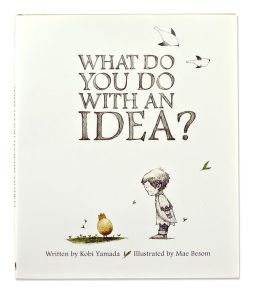 As he becomes more self-aware, his worldview and perspectives expand. He discovers that having different ideas is okay. He comes to own his idea because it is, after all, his.
I think the book jacket sums it up nicely: This “is a story to inspire you to give your ideas some time and space to grow and to see what happens next.”
“Lois, when I came across this book, I knew it was what I wanted to give you as a thank you. You have worked with me, with my head full of scattered ideas for four years now, and you have influenced me so much by your ideas.”
Thank you, Linda! I can hardly wait to hear about your next idea.
We recently talked about the top ten best practices for mentors. But what about the mentees? Don’t worry, we have you covered!
Here are top ten mentee best practices from our 2015 Mentoring Matters Reader Survey:
1. Focus on achieving learning goals
2. Expect to drive the mentoring relationship
3. Create SMART goals that will contribute to your development
4. Be authentic, open and honest
5. Prepare for all mentoring meetings
6. Stay connected and in communication with your mentor
7. Be willing to stretch and step out of your comfort zone
8. Ask for specific feedback
9. Focus on the future
10. Keep a journal
If you have other best practices that you’d like to add, please let us know!