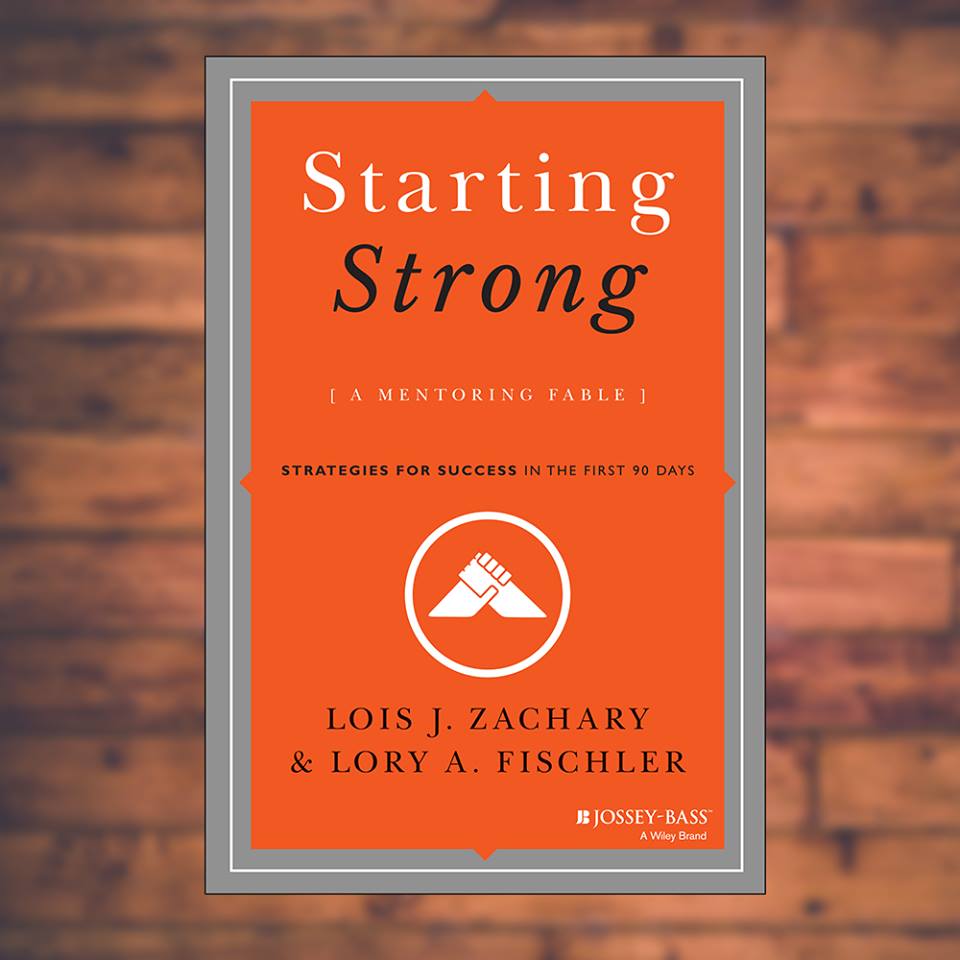
Starting Strong: A Mentoring Fable provides a view inside six successful mentoring conversations that take place over 90 days. The reader is privy to the thoughts and reflections of both the mentor and mentee, and gets to observe the personal dynamics of a successful mentoring relationship as it unfolds. It’s an excellent training resource because it models how good mentoring should look and feel.
Cynthia is one of the mentors you meet in the book. Cynthia learned the hard way about how to create a successful mentoring partnership. After a few failed mentoring relationships of her own, she grew from the experience. By the time she launched her next relationship, she was savvier and had a clearer understanding of what it takes to achieve tangible results.
As a Program Coordinator, your mentoring pairs can benefit from Cynthia’s wisdom and experience. During the first 90 days of her relationship, she engaged her mentee in six essential conversations that led him to deepened insight and transformation.
What made the difference for Cynthia? What did she do differently that made her more successful? In Starting Strong, you will learn about Cynthia’s strategies for mentoring success:
Cynthia recognizes that her mentee will be uneasy as the more junior employee, mentored by a senior executive. She takes time to get to know him and put him at ease before launching into the work of mentoring.
Some key structures and agreements help set the tone and expectations for progress and accountability. The mentee, who is new to mentoring, thought mentoring was an informal drop-in relationship.
Learning is the purpose and product of mentoring — and its goals drive the learning. Mentors and mentees alike struggle with goal setting. It can be tempting for mentees to pick goals they can easy achieve or that aren’t relevant to their work success.
Application of skills and learning are a critical part of mentee success.
Stumbling blocks are inevitable in mentoring relationships. Mentors and mentees need a confidential, safe place to get coaching around issues that surface.
The 90 day mark is an excellent time to schedule a check-in with mentoring partners.
How have you made the most of your first 90 days of mentoring?
Starting Strong provides a view inside six successful mentoring conversations that take place over 90 days. The reader is privy to the thoughts and reflections of both the mentor and mentee, and gets to observe the personal dynamics of a successful mentoring relationship as it unfolds. It’s an excellent training resource because it models how good mentoring should look and feel.
Cynthia is one of the mentors you meet in the book. She is an experienced mentor who is committed to her own growth and development as a mentor and the growth and development her mentees.
The story of Cynthia and her Gen-Y mentee unfolds over 90 days (six mentoring meetings) and you get to sit in on each of them. You will hear their private thoughts before, during and after their meetings. At the end of each chapter, you will find questions to prompt personal reflection and spark conversation about the chapter content.
Cynthia learned the hard way about how to create a successful mentoring partnership. After a few failed mentoring relationships of her own, she grew from the experience. By the time she launched her next relationship, she was savvier and had a clearer understanding of what it takes to achieve tangible results.
What made the difference for Cynthia? What did she do differently that made her more successful?
In Starting Strong, you will learn about Cynthia’s strategies for mentoring success:
Cynthia recognizes that her mentee will be uneasy as the more junior employee, mentored by a senior executive. She takes time to get to know him and put him at ease before launching into the work of mentoring.
Some key structures and agreements help set the tone and expectations for progress and accountability. The mentee, who is new to mentoring, thought mentoring was an informal drop-in relationship.
Learning is the purpose and product of mentoring — and its goals drive the learning. Mentors and mentees alike struggle with goal setting. It can be tempting for mentees to pick goals they can easy achieve or that aren’t relevant to their work success.
Application of skills and learning are a critical part of mentee success.
Stumbling blocks are inevitable in mentoring relationships. Mentors and mentees need a confidential, safe place to get coaching around issues that surface.
The 90-day mark is an excellent time to schedule a check-in with mentoring partners.
The conversation playbook guides you so that you can engage in parallel conversation with Cynthia and her mentee. It prepares you for your mentoring sessions by suggesting appropriate conversation topics, starters and probing questions to use to build a solid foundation for your own mentoring relationships during the first 90 days.
Are you from Gen X or Y, anxious to advance your career?
Are you eager make a mark in your organization?
Are you committed to orchestrating your own future?
If you’ve answered “yes” to any of these questions, you will need good mentors if you’re going to be successful.
In our new book, Starting Strong: A Mentoring Fable, you have the opportunity to observe mentoring at work and learn valuable lessons from an experienced mentor about what makes a mentoring relationship successful.
Cynthia, a talented and successful VP of Marketing and Communications agrees to mentor Rafa, a Gen Y financial analyst. Cynthia enjoys mentoring talented, ambitious employees, but only when she is sure that her time investment will truly make a difference.
Rafa is new to mentoring and doesn’t know what to do or what to expect. In retrospect, he realizes that he had a lot to learn about mentoring. The truth of the matter is, most mentees, like Rafa, would like to come to mentoring better prepared.
In Starting Strong, you soon discover just how important the first 90 days are to laying the groundwork for a productive and successful mentoring relationship and what you can do to prepare yourself so that your mentoring relationship starts out and stays strong.
Here’s a sneak peek at some of the success strategies you will find in our book:
Get to know your mentor and help them get to know you.
Do you feel comfortable being honest and open about your strengths and weaknesses?
Establish agreements that define your relationship and clarify your expectations.
How often will you meet?
What is your understanding about confidentiality?
Who will set the agenda for your meetings?
Articulate the goals that will be the focus of your relationship.
Are they SMART (Specific, Measurable, Achievable, Relevant and Timely) enough to produce tangible results?
Identify specific learning opportunities that will encourage you to stretch and grow.
Are you playing it safe, or are you being pushed out of your comfort zone?
Here’s another question we often get about mentoring. Again, we hope it helps you in your own mentoring adventures.
Note: These questions are compiled from several questions we receive, and do not necessarily reflect any one person’s submission.
Q: I’ve been tasked by my HR VP to start a mentoring program to prepare our managers for new roles with greater responsibilities. Our VPs and senior leaders are the mentors and I’m supposed to put together a training session for them. I have never developed a training program before and I have never trained senior leaders. I’m shaking in my boots. Help!
A: Help is on the way! Your leadership has identified an important business imperative behind mentoring efforts, which is a great first step. Mentoring is not just a “feel-good” activity. It should address the strategic business goals of the organization. You need to ensure that your efforts and investments pay off. It can be overwhelming to create a dynamic mentor training program that is engaging, participative and informative.
An organization that identifies mentoring as a strategic tool must develop its in-house capacity for mentoring training. To be a truly effective mentor trainer, you have to develop some expertise in mentoring. We have a solution for you. Our Mentoring Facilitator Trainer Certification Program will prepare you to deliver Mentoring: Strategies for Success in your organization. The content of that program will ensure your mentor leaders:
Understand the purpose and key concepts of mentoring and how it differs from coaching
Identify their learning style and the role of learning in facilitating mentee growth and development
Recognize the four predictable phases in the mentoring cycle and the key components of each phase
Structure the initial mentoring conversation to get started on the right foot
Explore how to set learning goals, set priorities and identify milestones
Recognize and overcome common stumbling blocks in a mentoring relationship
Support, challenge and provide effective feedback to mentees
Bring the relationship to successful closure
Our training certification process will allow you to master the content and gain experience delivering the material to your audience. You will walk away after three days with all the tools, competencies and confidence you need to be successful.
And you’re in luck. Our next training event is coming up, Monday, September 29 – Wednesday, October 1. Registration is open now, but it fills up fast, so register today!
People often ask us questions about mentoring or seek mentoring advice. We decided to answer a few of these questions on the blog this month. Hopefully their questions (and our answers) will shed some light on your own mentoring questions.
Note: These questions are compiled from several questions we receive, and do not necessarily reflect any one person’s submission.
Q: Six months ago, our mentoring program was announced. Everyone, and I mean everyone, was buzzing about it and our people were eager to get started. At first, there was a flurry of activity and everyone was meeting with their mentee and really pretty excited. But all that energy was short-lived. About six weeks in, our mentors started telling us they had run out of things to talk about. As it turns out, most of them were just having coffee and catching up. It seems like we’ve missed the boat somehow. What would you suggest?
A: What you are describing is the Three Cups of Coffee Syndrome. The mentor/mentee relationship has been established, but it lacks direction, focus or goals to move mentoring forward. This is what often happens when organizations launch a mentoring program without providing sufficient and consistent training for their mentors.
Good mentoring requires specific skill sets. Even leaders who engage in informal mentoring throughout their entire careers struggle with creating successful mentoring partnerships.
Mentoring training builds more confident and competent mentors. It promotes mentor readiness, creates a standard of mentoring practice, provides guidelines for ensuring mentoring success and offers a safe climate of support. Mentor training offers a roadmap and a benchmark for mentors to measure their success as well as strategies to address stumbling blocks quickly.
Good mentoring training saves time. It keeps mentoring interesting, productive and on track from the get-go.
If you’re interested in mentoring training, register for our 3-day training certification program. The Mentoring: Strategies for Success program will teach you how to lead your own one-day training for your organization. Our next program is Monday, September 29 – Wednesday, October 1. Seats are limited, so register today!
Mentoring is an investment of time and effort. To get it right, it is important to prepare the people in your organization and make sure everyone is on the same page. Are your HR and learning/development specialists ready?
Our “Mentoring: Strategies for Success” Trainer Certification Program might be just what your organization needs right now. The Center for Mentoring Excellence’s most popular one-day workshop has been presented to organizations throughout the world for over a decade. This comprehensive workshop provides all the tools and strategies mentors and mentees will need to engage in productive, learner-centered relationships.
Make the investment to train your trainers in mentoring and watch how quickly you reap these rewards. We think you will agree, it is well worth the effort.
Increased talent retention
Heightened employee engagement and productivity
Support for diversity and inclusion
Enhanced employee and career development
Fast-tracked leadership development
Stronger leadership bench
More commitment and collaboration
Enrollment is limited. Take advantage of this limited opportunity and sign up now!
In today’s connected world, mentoring for leadership and career development is easier than you might think. With collaboration and video conferencing tools, you can build relationships across the globe and develop your career from the comfort of your own home. Don’t get me wrong; meeting in person is always preferred. But, could you mentor remotely? Of course! Let me show you. Follow these five steps to launch your distance mentoring relationships into the cybersphere.
1. Incorporate Google tools in your mentoring work plan
From Google Hangouts to Google+, the search-engine super star has many gizmos that are perfect for mentoring. If you haven’t joined Google+, I highly recommend that you do so quickly. In addition, use Google Drive to share and collaborate on documents, projects and presentations with your mentors or mentees. It’s easy and makes working together simple and cooperative.
2. Create a LinkedIn group
With LinkedIn, you can produce and share content with large groups of people. But what about sharing content with a select few? The platform allows you to leverage groups to build a safe space to share experiences and to network.
3. Adopt a video conferencing tool
Meeting face-to-face is such an important part of building relationship. Now we have technology that can help. From iMeet to Fuze, there are many conferencing services available. With the right tool, you can connect with your mentees (or mentors) from anywhere and even maintain your meeting schedule. So, when you’re working on the road or traveling with your family, check in with your mentor and continue to build your relationship via video. If you have an iPhone, you can Facetime in to meetings and touch base with your mentees with the click of a button.
4. Use Twitter to connect
I expect my mentees to continuously grow their careers and develop as people. When I can’t see my mentees, or I have to miss a meeting, Twitter allows me to stay in touch. You can use the platform to check in, comment on work or add your two cents to project or personal development. Want to send a private message? The platform offers that function as well. Don’t fret the 140-character limit; it can be a blessing — trust me.
5. Encourage your mentees to use social media
Social media is an excellent place to build a professional network, find a mentor and nourish your relationships — use it. You should use Twitter, Facebook, LinkedIn, Google+ and Pinterest to share your ideas and build a community of people that share your interests. The world has never been more connected, so get out there and meet people.
As you can see, there are many tools out there to help you stay connected and continue to build your professional relationships. It’s up to you to use them.
If you have questions, contact us. We’re here to help you.
Listening at all levels is the most important thing that I do.
Listening to others and helping them find their own way.
Listen with an open mind without being judgmental.
Truly listen so assumptions are not being made.
Listen fully and carefully before offering your advice or opinion.
Spend more time listening than talking.
Listening and questioning to help my mentee reach their solutions.
Be authentic, be warm, be honest and be an engaged listener.
Mentors should know themselves well enough to know when their personal strengths or biases cloud the way they listen to and encourage/advise their mentee.
Hear what is said in between the message, not just listening to what is said.
Read, observe, listen and ask lots of questions
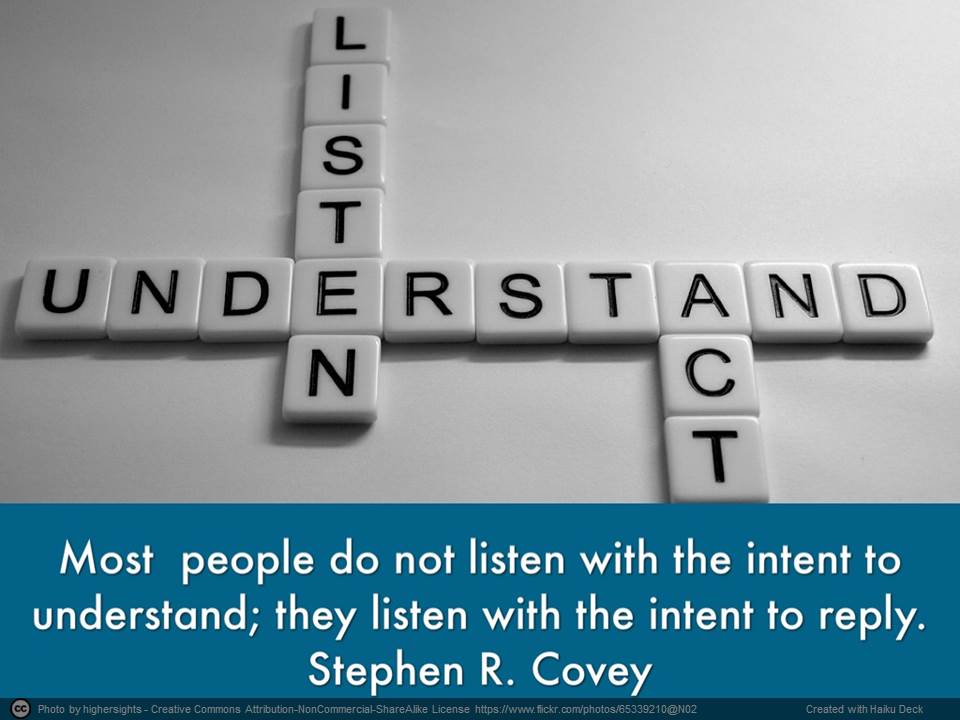
There is a clear message here about the importance of listening.
Listening serves many purposes in addition to letting mentees know that you care. Listening builds mentee confidence. It lets mentees know they have something meaningful to contribute. Listening encourages them to work out their thinking. Invariably, they arrive at a solution on their own. Mentors often discover that the listening skills they develop through mentoring transfers to other functions, boosting their effectiveness in their other leadership roles.
What can you do to improve your skill at listening?
Identify the good listeners you know.
What do they do that shows they are listening?
Make a list of those behaviors and then gauge how you measure up.
What do you need to do more of?
What do you need to do less of?
What is one thing you can work on right now that will help you develop and hone your listening skills?
Whether you’re a mentor or a mentee, social media is a fantastic tool to amplify your voice and help you join communities. It provides you with the tools to reach out to those who inspire you to develop your career. Luckily, there are many social tools to help you along the way. Let’s look at the benefits of using social media as a mentor or mentee.
Finding a mentor
You could tweet a potential mentor on Twitter or send them a message on LinkedIn. But, convincing someone you’ve never met to be your mentor can be tricky. It’s critical that you know as much as possible about your prospective mentor before you reach out. Fortunately, researching is easy.
On Twitter, you can identify possible mentors by monitoring trending hashtags or creating lists of influential people. And, on LinkedIn, you can join industry-specific groups and build relationships with people you find inspiring.
Connecting with a mentor
Depending on the etiquette of the platform, reaching out to your potential mentor could be easy. On Twitter, it’s as simple as a follow. After you follow your potential mentor, make sure to add their handle to a list so that you can easily find and interact with their content.
On LinkedIn, it’s challenging. You don’t want your budding mentor to see you as spam, so be genuine and sincere. Reach out to them via InMail before you send an invitation to connect. Remember, LinkedIn is a professional platform — avoid the cat videos and silly memes.
Be yourself
When you interact on social media, be yourself. Being honest with potential mentors is the key to building rewarding professional relationships. In our digital world, it’s easy to connect and build professional relationships with people in any industry.
More and more businesses and organizations are turning to group mentoring to enhance the growth and development of their employees and accelerate organizational learning.
Why is there so much interest in group mentoring?
Group Mentoring. . . .
Leverages the experience and expertise in an organization
Provides an opportunity to build and strengthen relationships across, down and through the organization
Promotes diversity and inclusion
Offers mentors and mentees an opportunity to expand knowledge
Exposes participants to multiple levels of expertise and organizational knowledge
Creates shared understanding and alignment
Maximizes time availability of qualified mentors and participants
Creates a more efficient and scalable way to promote learning and development
Complements and enhances one on one mentoring
Mentoring groups are structured in multiple ways. The possibilities are unlimited, from peer-to-peer, leader-led, virtual, nested configurations, to DIY groups . . . and the list goes on. The reasons you articulate for initiating group mentoring will drive the composition and structure of your mentoring groups.
Who will fill these seats in your organization? In which seat will you be sitting?
 As a Program Coordinator, your mentoring pairs can benefit from Cynthia’s wisdom and experience. During the first 90 days of her relationship, she engaged her mentee in six essential conversations that led him to deepened insight and transformation.