by Center for Mentoring Excellence | Mar 21, 2017 | Facilitating Learning, Growth and Development, Making Mentoring Work For You, Mentoring Training, Supporting Mentors and Mentees
The Center for Mentoring Excellence has conducted more than 200 interviews with mentors and mentees in formal mentoring programs around the globe using a process we created called Touch Base Interview (TBI) Coaching Sessions™. These coaching sessions offer mentors and mentees confidential, just-in-time coaching and support at critical milestones in the mentoring cycle. This works to ensure mentoring success by helping mentoring partners stay on track, grow and develop. (more…)

by Center for Mentoring Excellence | Dec 20, 2016 | Facilitating Learning, Growth and Development, Making Mentoring Work For You, Mentoring Relationships, Supporting Mentors and Mentees
Being a mentor (and a mentee) often means working with and building relationships with members of other generations — both older and younger. Here’s your go-to mentoring guide for cross-generational mentoring relationships: (more…)
by Center for Mentoring Excellence | Dec 6, 2016 | Facilitating Learning, Mentoring Training
One of the highlights of this past year for us has been working with the Dallas County Community College District (DCCCD) to establish a successful mentoring culture.
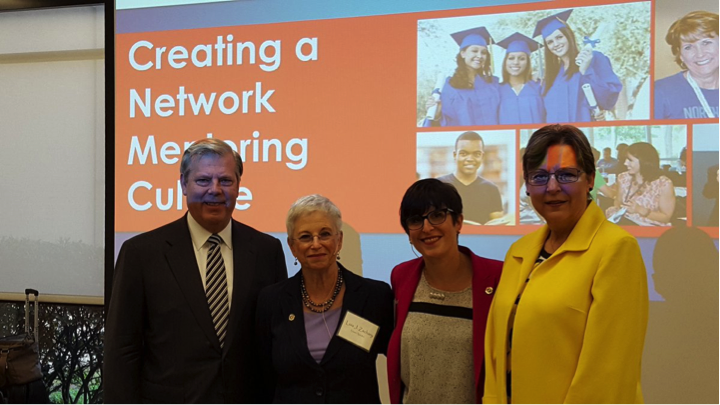
DCCCD launched its Network Mentoring Culture in August by convening the Chancellor’s staff and presidents, HR representatives and other college leaders with a primary goal: to create a mentoring culture.
According to George Marquez, DCCCD’s Executive District Director of Talent Development and Division of Talent Central:
“From my perspective, successful employee engagement into the DCCCD system occurs with talent development programs and a mentoring system. We sincerely believe that the mentor component is the strongest bond that we can have in any of our employee programs because mentors provide a safe way to extend the skills and knowledge of employees through encouragement and support. Having a system of mentors also allows us to strengthen our succession planning.”
A kickoff training for Chancellors Fellows and their mentors followed a day-long consultation with DCCCD leaders.
In October we certified 18 DCCCD mentoring workshop facilitators (from seven colleges, across three locations) to conduct Starting Strong: What Mentors Need to Know and Do™ based on the book Starting Strong.
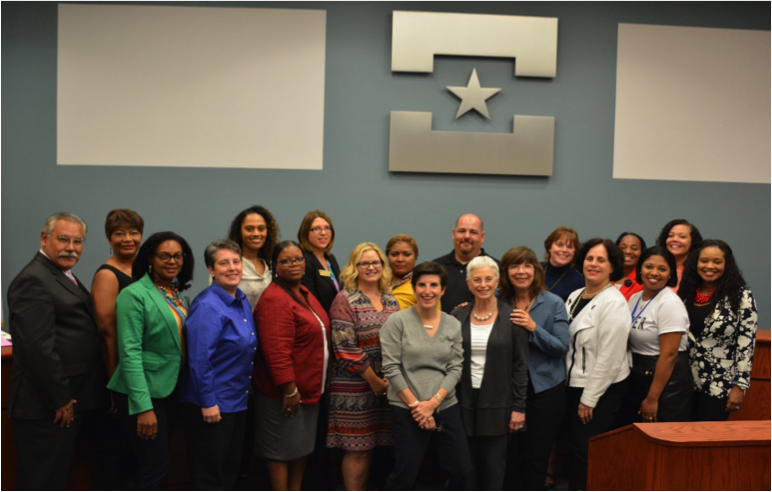
Newly certified DCCCD Starting Strong facilitators.
We were, and continue to be, impressed with the passion, commitment and talented leaders we had the privilege of certifying. Their individual contributions made the certification such a warm and welcoming experience for everyone!
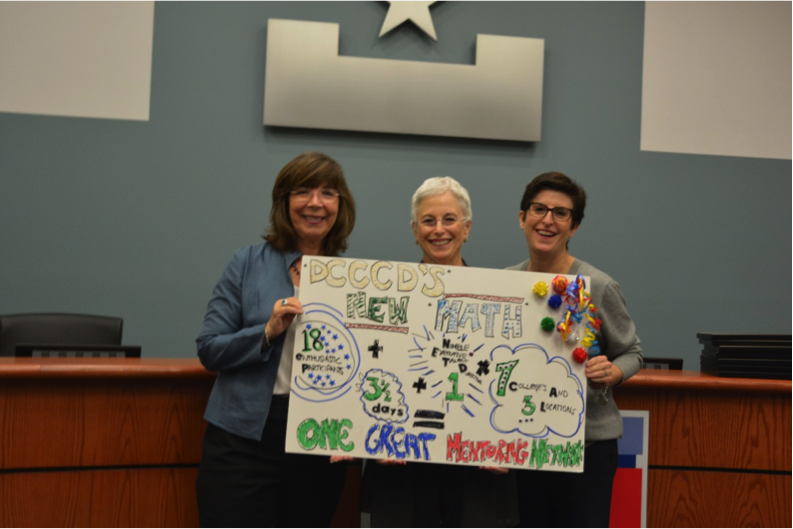
Lory Fischler, Dr. Lois J. Zachary and Lisa Fain presenting their memento.

by Center for Mentoring Excellence | Nov 22, 2016 | Facilitating Learning, Group Mentoring, Growth and Development, Mentoring Training
In September we had the privilege of working with UN Women as it launched its first formal leadership development mentoring program in Cairo, Egypt. Participants from the Ivory Coast, Egypt, Uganda, Moldova, Albania, Liberia, South Africa, Rwanda, New Delhi, Istanbul, Santo Domingo, Panama, Brussels, Copenhagen and Geneva joined us for the mentoring kickoff training.
UN Women mentees volunteered for this global initiative for a variety of reasons: They were looking to invest in their own development and take their leadership to the next level. They wanted career guidance. And they wanted candid, safe feedback. These were the things they worked on — things that would really matter!
Like other mentees we’ve worked with, this team came to mentoring with the very same concerns and questions. They wondered:
- Will I be worthy of a senior leader’s time?
- Will I be able to accomplish enough during their mentoring timetable to make the investment valuable?
- Will I feel comfortable and be able to build trust with a leader I don’t know?
- Will the feedback I receive be confidential and useful?
- Will my mentor have time in their demanding schedule to connect with me?
However, we did find some unique challenges for mentoring pairs in third-world countries, especially when trying to connect across time zones. Poor quality Internet service and gaps in time zones can make communication particularly difficult. Even so, mentoring has been value-added for these mentees, who say they appreciate the support provided by mentors and the opportunity mentoring gives them to reflect on themselves, their development and their future.
UN Women is the United Nations entity that promotes gender equality and the empowerment of women. Its Mentoring Program is designed to grow its workforce by giving mentees access to role models, tapping into networks and increasing visibility. It also helps mentors develop key leadership skills, giving them the opportunity to directly support the next generation of UN Women.


by Center for Mentoring Excellence | Sep 6, 2016 | Facilitating Learning, Growth and Development, Mentoring Communication, Mentoring Training
At first, mentoring and leadership coaching could seem like interchangeable terms for the same training program. However, when you understand the difference between the two methods, you realize, to be a strong leader, you need both. In their simplest forms, mentoring is about building valuable relationships with other people, while leadership coaching programs concentrate on improving performance.
Mentoring is a robust improvement tool customized for personal growth. Mentorship is an efficient way to help people advance in their careers while building meaningful relationships. Typically, it requires two people (a mentor and a mentee) who work in a related field and share professional experiences. Through respect and trust, the two people work together to realize the mentee’s potential and discuss a plan to achieve their goals.
Although mentoring is an essential tool for all professionals, leadership coaching is equally valuable. Through leadership coaching, you have the opportunity to hone your management skills and enhance your performance as a leader. Unlike mentoring, leadership coaching can be completed in a group or individual sessions.
Leadership coaches are often hired from outside your organization and, sometimes, your field. The separation from the company allows the coach to discuss topics and solve problems that could be unsuitable to address with your supervisor.
To make your career goals a reality, you must understand your professional path and continuously improve your performance. The simplest way to enhance your career experience is through strong relationships with a mentor as well as a leadership coach.
The Center for Mentoring Excellence offers the
tools and
training needed to help you achieve your mentoring and leadership goals. Also, we provide a variety of resources to help you strengthen your leadership abilities and boost your team’s productivity. So what are you waiting for?
Contact us today!

by Center for Mentoring Excellence | Aug 11, 2016 | Facilitating Learning, Goal Setting Conversation, Growth and Development, Making Mentoring Work For You, Mentoring Questions, Mentoring Relationships
One of the biggest parts of mentoring? Asking questions! But when should you ask questions? And when the time is right, what should you ask? Here’s a handy list of questions you should be asking your mentee over the course of your mentoring relationship:
For starting the mentoring relationship:
- How do we make this process work for you?
- What are your expectations?
- What would you recommend we do to make this work?
- What are you willing to commit to?
For goal setting:
- What is the most important thing you want to achieve?
- What can I do to help you with your leadership development?
- What is your strongest attribute?
- Where do you see your challenges?
- What would help raise your confidence level?
For pushing and challenging your mentee:
- Is this goal worthy of our time and effort together?
- What might be a challenging project for you to undertake?
- What would it be like to step out of your comfort zone?
- How is this goal going to contribute to your development?
- Did you think you are putting in sufficient effort to accomplish results?
- Why do you think there is only one solution? What else might you try?
- If you were grading your results, what grade would you give yourself?
For goal achievement:
- Did you get the results you hoped for?
- How would you approach this situation?
- Where else can you apply that?
- What is your team looking for from you?
- Is your supervisor seeing a difference?
- How else might you tackle that?
For checking in and feedback:
- What value has this provided for you thus far?
- What can we do differently to improve this relationship?
- Are we on the right path?
- What feedback have you received?
- How do you know you are making an impact?
- How can we make this work for both of us?
- How do you think you are doing?
- Are you satisfied with your results?
- Are you putting in the effort you feel you should?
- You’re quiet … what are you thinking?
- Whose feedback would be a benefit to you?
Ready to get started? Let us know how these questions help improve your mentoring relationships.
(Photo via Flickr CC: Colin_K)