The Empty Room That Taught Me About Connection

For 17 years, we lived in Chicago.

I built a career there. I started a family there. I raised babies there. I learned how to be an adult there, in the blunt, beautiful, exhausting way adulthood often teaches us: long hours, longer commutes, too much to carry, not quite enough money in the bank, and a calendar that looked full but somehow did not feel sustaining.

My marriage was strong. My work was satisfying. Our life was good in many ways.

And still, I was lonely.

Not lonely in the dramatic, abandoned-on-a-mountaintop sense. I had people around me. We had great neighbors. We had couple friends we liked and saw now and then. I had work colleagues, fellow parents, people I genuinely enjoyed.

But I did not have the kind of deep female friendship I ached for. I missed the easy camaraderie I had known with my college friends, the shorthand, the kinship, the sense of being known without having to explain the whole backstory every time. Those friends were scattered around the country, and I found myself longing for something I could not quite seem to build where I was.

I remember hearing the advice that if you want to have friends, you have to be a good friend. So I tried.

I volunteered. I joined parent committees. I showed up in religious and civic spaces. I invited work colleagues to lunch. I looked for ways to offer generosity and kindness, hoping that if I kept extending myself, something would take root.

The Denim Bar

One moment from that time has stuck with me:

At a charity silent auction, I bid on – and won – a party for 20 at a denim bar. At the time, this was a new and lively concept: a place where you could go, get fitted for a great pair of jeans, have a little fun, maybe drink something bubbly, and leave feeling slightly more fabulous than when you walked in.

I thought it would be a perfect way to gather a group of women.

So I invited women I knew and liked. I bought refreshments. I watched the responses come in through Evite. About 10 women said yes.

The night of the party, I set everything up and waited.

At the appointed hour, no one came.

Forty-five minutes passed.

Finally, one person walked in.

We laughed a little. We tried on jeans. We made our purchases. We called it a night.

Then I went home and cried.

I did not cry because I felt embarrassed, though I did. I did not cry because people were cruel, because they were not. People are busy. People forget. People have sick kids and deadlines and traffic and lives with their own invisible weather systems.

I cried because the empty room told me something I already feared was true: I had not built the kind of relationships my soul needed.

What I Got Wrong About Friendship

For years, I thought about that night as a friendship story. A painful one. One that was a little humiliating.

But over time, I began to understand it differently.

The problem was not simply that I needed more friends. The problem was that I was looking for friendship as if it were one thing. One magical circle. One group that would offer belonging, fun, honesty, encouragement, accountability, perspective, challenge, and care.

What I really needed was not one perfect community.

I needed an ecosystem.

A Different Way of Building Relationships

That realization became even clearer after I moved to Seattle, a city famous for the so-called Seattle Freeze. I braced myself for distance. Instead, in a relatively short period of time, I found myself surrounded by a richer, more nourishing web of relationships than I had experienced in all my years in Chicago.

Part of that was timing. Part of it was openness. Part of it was luck.

But part of it was that I had changed.

I was no longer waiting for friendship or support to appear fully formed. I had become more intentional about seeking different relationships for different purposes.

At the same time, I hired a coach. I joined a mastermind of women entrepreneurs. I built relationships that were not centered on our children or our spouses or our proximity, but on mutual curiosity, shared growth, and the willingness to tell each other the truth.

And slowly, I began to see the pattern.

Some relationships helped me feel known.

Some helped me think bigger.

Some challenged the stories I was telling myself.

Some opened doors.

Some reminded me to rest.

Some helped me sharpen my ideas.

Some held up a mirror.

Some held my hand.

None of these relationships had to be everything. Together, they became enough.

What This Taught Me About Mentoring

That insight changed how I thought about mentoring, leadership, and growth.

For years, we have treated mentoring as if it requires finding one wise person who will guide us. The mentor. The sage. The person with the answers. But that model is too narrow for the complexity of real life and real work.

No one person can be our challenger, sponsor, connector, truth-teller, strategist, encourager, role model, and safe harbor.

And when we expect one person to do all of that, we often end up disappointed. Or we do not ask at all, because the ask feels too big.

But when we begin to think in terms of a developmental network, everything changes.

The Power of a Developmental Network

A developmental network is the constellation of people who help us grow. It may include mentors, peers, sponsors, coaches, colleagues, friends, former bosses, clients, teachers, and people who see something in us before we fully see it ourselves.

It is not about collecting contacts. It is not about networking in the transactional sense.

It is about building the relationships that help us become more courageous, more discerning, more useful, and more fully ourselves.

We Grow Through Relationship

That is the heart of my message now.

Growth does not happen in isolation. Better judgment does not develop in a vacuum. Impact does not come from rugged individualism, no matter how much our culture romanticizes it.

We grow through relationship.

We make better decisions when we have people who help us see what we cannot see alone.

We become braver when we have people who remind us who we are becoming.

We create more impact when we stop waiting to be chosen, rescued, or discovered, and instead begin to design the network that helps us contribute at a higher level.

The Woman in the Denim Bar

Looking back, I have compassion for the woman standing in that denim bar with her refreshments and her hopeful little Evite list.

She was not needy. She was not foolish. She was not failing.

She was seeking.

She was looking for the relationships that would help her feel more rooted, more supported, more alive.

I still believe in generosity. I still believe in being a good friend. But I no longer believe that support is something we should leave to chance.

We can be more intentional than that.

We can ask: Who helps me think? Who helps me tell the truth? Who helps me grow? Who helps me remember what matters? Who opens doors? Who challenges me with care? Who do I support in return?

This is not about being a joiner.

It is about being a seeker.

A learner.

A connector.

Most of all, it’s about being a designer of the relationships that make a bigger life, and a bigger contribution, possible.

Chicago skyline at twilight with illuminated buildings and a subtle network overlay connecting city lights, representing developmental networks, mentoring relationships, leadership growth, and human connection.

The AWE Question: How Wonder Opens Better Mentoring Conversations

Have you ever been struck by something outside yourself that filled you with a sense of awe?

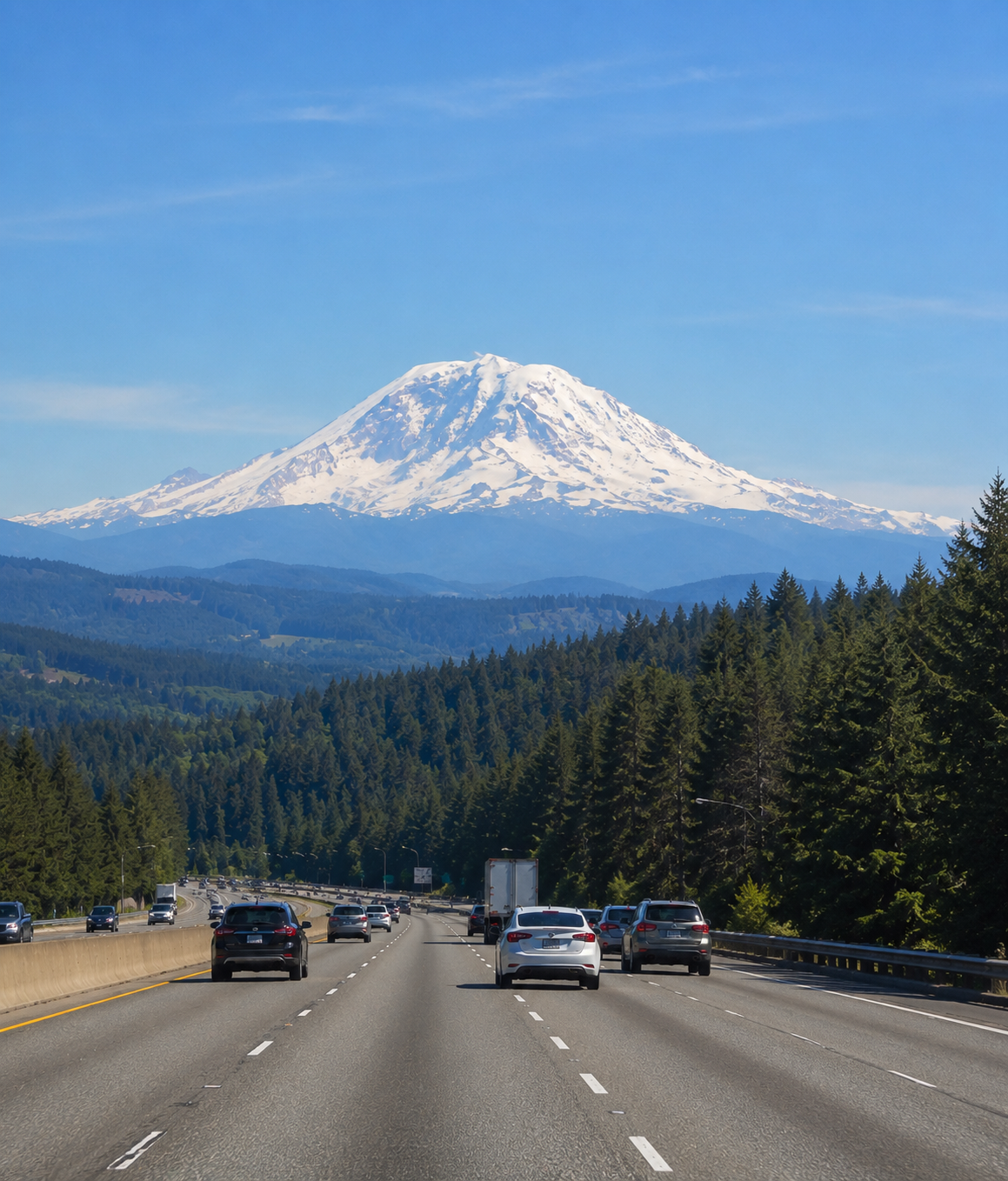
For me, it happens in the middle of ordinary moments. Like this: I might be driving down I-90, thinking about my day, when I glance up and see that, as we say around here, “the mountain is out.” There’s Mt. Rainier in the distance, vast and luminous against the sky.

And suddenly, the short winter days in Seattle feel like a fair trade. The rain, the gray, the early darkness all fade into the background. And in the summer, when daylight stretches late into the evening, the mountain feels like icing on the cake, an invitation to squeeze in a weeknight hike and still make it home before dark.

It feels breathtaking. At once calming and invigorating. It takes me out of my head and away from my thoughts. It makes me more present and helps me feel part of something grander than myself.

That is what awe can do.

It pulls our attention beyond the tight circle of our own concerns so that we pay attention instead to what is in front of us.

When we are no longer focused only on ourselves, we become more available to wonder. Wonder is what happens when we pause long enough to notice that there is more here than we first understood. It does not rush to categorize, solve, or control. It lingers. It looks again.

And in that looking again, wonder becomes a doorway to curiosity.

Curiosity is wonder put into motion. It asks: What else is here? What else might be true? What else have I not yet seen?

That same spirit belongs in our mentoring conversations.

Michael Bungay Stanier popularized one of the simplest and most powerful coaching questions in The Coaching Habit: “And what else?” He calls it the AWE Question. It is a memorable acronym for a deceptively small question, one that asks us to stay curious a little longer before advising, solving, interpreting, or steering. It’s a great question for coaching, and for mentoring.

In mentoring, the first answer is often the polished answer. The practiced answer. The answer the mentee gives because it is the one most available to them in the moment. “And what else?” gently opens another door. It says, “I’m still with you. I’m still interested. There may be more here.

Research supports this intuition. In a recent article in The Chronicle of Evidence-Based Mentoring, Jean Rhodes summarized research on listening, curiosity, and connection in mentoring relationships. One key finding: follow-up questions are not conversational filler. They are among the most reliable predictors of connection. Studies cited in the article link thoughtful follow-up questions to greater liking, perceived responsiveness, trust, autonomy, relatedness, and willingness to disclose again in the future.

In other words, curiosity is not simply a nice mentoring quality. It is a relational behavior people can feel.

This is powerful because mentoring is not merely the transfer of advice from someone more experienced to someone less experienced. At its best, mentoring helps people hear themselves think. It helps them locate their own judgment, name their own desires, and see possibilities they might otherwise miss.

A mentor who moves too quickly to advice may miss the deeper layer.

A mentor who stays curious can help the mentee find it.

And what else?” gives that deeper truth room to emerge.

A mentee can also use the question for themselves: “What else might be possible here?

The question is not only useful inside a formal mentoring relationship. Moving Beyond Mentoring, “And what else” is a great question to ask ourselves when we think about our developmental networks – the relationships we need to help us, and others, grow). In a developmental network, growth does not come from one wise person with all the answers. It comes from a web of relationships that help us see more fully. Curiosity activates that web. It helps us ask better questions of peers, sponsors, managers, colleagues, direct reports, friends, and even ourselves.

Within mentoring, the AWE Question deepens the conversation.

Beyond mentoring, it becomes a way of moving through the world.

It asks: What else is true here? What else might be possible? What else am I not seeing? Who else might help me grow?

The next time you feel the urge to give advice, pause.

Let wonder do its quiet work.

Then ask: “And what else?

View of Mt Rainier from freeway

Are Books Dead? Or Are We (Finally) Rethinking How Humans Learn?

When I asked Ori Brafman, professor at UC Berkeley’s Haas School of Business, what questions he had been wrestling with lately, he wondered aloud about the future of books in a world where learning is increasingly interactive and relational.

The inquiry stopped me cold. Because I love books.

Fiction and nonfiction. Memoir, business, romance, historical novels. I surround myself with them. I read them, recommend them, and keep stacks within reach. Even unread books bring me comfort. They represent possibility and ideas waiting to be explored.

It prompted my reflection on a deeper question: Does the architecture of learning that books represent still match how people learn today?

Many of the learning formats we rely on were designed for a different era. Long readings, lectures, and traditional training modules often fail to engage modern learners. This shows up in classrooms and workplaces alike. Organizations invest heavily in training content, yet participation and retention remain stubbornly low.

Shrinking attention spans and digital distraction are common explanations. Those factors play a role. But they miss the deeper issue. The challenge is how we design learning.

Many learning systems still prioritize the transfer of information. The modern workplace increasingly demands something more: discernment, perspective, and judgment.

The challenge is no longer access to knowledge. It is making sense of it. When learning systems fail to support that work, organizations face a costly consequence: human potential that remains underdeveloped and underutilized.

For much of the last century, formal learning followed a familiar pattern: read the material, listen to the lecture, absorb the framework. The learner sits outside the knowledge, looking in.

Historically, humans learned differently. Learning happened through apprenticeship, storytelling, observation, experimentation, and conversation. Knowledge was experienced in context rather than delivered at a distance.

Learning was immersive.

This insight aligns with decades of research on adult learning. Malcolm Knowles argued that adults learn most effectively when learning is self-directed, relevant to real problems, and immediately applicable (Knowles, Holton & Swanson, 2015). David Kolb’s experiential learning model similarly emphasizes cycles of experience, reflection, and experimentation (Kolb, 1984).

Yet many modern learning environments continue to rely on lectures, readings, and static content. Traditional formats often conflict with what research shows about how adults learn.

Relationships create immersion every day.

In my work helping organizations design mentoring and learning ecosystems, mentoring is frequently misunderstood as advice or knowledge transfer. A more experienced professional shares what they know, and the mentee applies it.

But mentoring at its best does something deeper. It allows people to step inside another person’s thinking, experience, and judgment.

Knowledge transfer builds knowledge. Development builds discernment.

That distinction matters more than ever because information is abundant. Books, courses, podcasts, and digital tools can deliver knowledge instantly.

The harder task is interpretation.

The current debate about artificial intelligence often centers on whether technology weakens our ability to think. A more productive question is how these tools might deepen thinking. AI can surface perspectives, questions, and patterns we might not encounter on our own. The interpretation and judgment that follow remain fundamentally human work.

That work happens best through conversation and connection.

Generational shifts make this even more visible. Younger professionals have grown up in environments shaped by interaction, rapid feedback, and social learning. Dialogue and collaboration are natural modes of learning.

Yet many organizations still rely on static learning models designed for a different era.
If learning is going to engage people, the answer is not simply more content.

The answer is better-designed learning ecosystems.

In those ecosystems, content provides ideas. Technology expands exploration. Relationships create the space where ideas become insight.

Developmental networks – the constellation of people who challenge us, support us, and expand our perspective – become the engine of learning.

Here is where I’ve landed on Ori’s provocative question:

  • Books still matter – but learning systems built around content alone cannot produce the kind of growth and transformation organizations need.
  • The future of learning must be more immersive, more relational, and more intentionally designed.
  • In our modern era, books spark ideas. They fuel curiosity. They introduce us to new ways of seeing the world.

Learning takes hold somewhere else.

It happens in relationships. Through action. Through the messy work of testing ideas, applying them, and rolling up our sleeves to engage with them in practice.
That is where discernment develops and where growth happens.

That’s why the future of learning will belong to organizations that intentionally design environments where people can engage with ideas together. 

Civility